

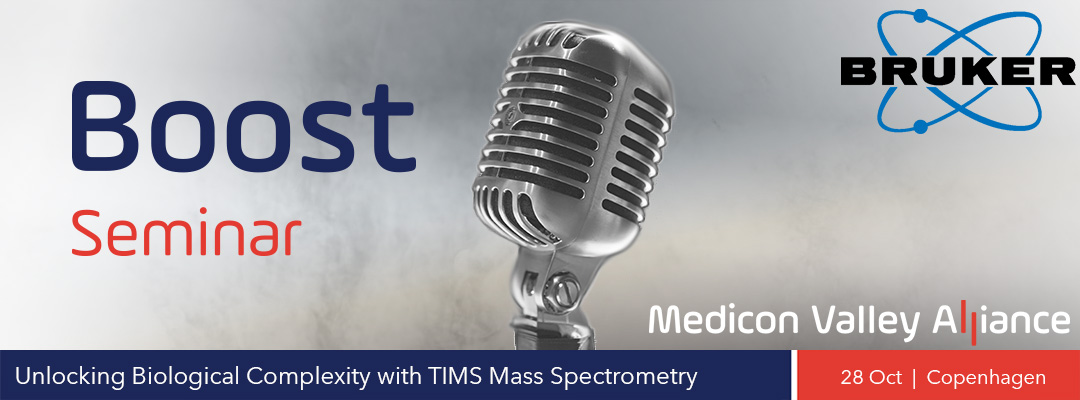

Medicon Valley Alliance and Bruker Daltonics would like to welcome you to a Boost Seminar 28th of October 2026.
Modern biologics demand a deeper understanding of molecular structure, heterogeneity, and product quality throughout development and manufacturing. This seminar highlights advanced analytical strategies for comprehensive characterization of biotherapeutics, including peptide mapping, protein sequence verification, higher-order structural analysis, host cell protein assessment, and quality control of complex biological products.
Attendees will discover innovative approaches that accelerate development, strengthen process understanding, and support the quality, safety, and efficacy of next-generation biologics.
Date: Wednesday, 28 October 2026
Time: 9:30 – 14:10
Venue: Medicon Valley Alliance, Arne Jacobsens Allé 13, 2300 Copenhagen S, Denmark – Front Stage
Program
| 9:30 | Networking, registration and light breakfast |
| 10:00 | Welcome and introduction to Medicon Valley Alliance David Munis Zepernick, Director, Member Engagement & Communication, Medicon Valley Alliance |
| 10:05 | Welcome and Introduction to Bruker Daltonics Mads Lundgren Petersen, Sales Specialist Pharma and Biopharma, Northern Europe, Bruker Daltonics |
| 10:15 | The timsOmni:Unmatched versatility for structural analysis and sequencing by precision MSn EXD methods Mass spectrometry is increasingly moving beyond molecular identification toward deeper characterization of sequence, modification sites, molecular structure and higher-order organization. The timsOmni platform expands the analytical toolbox of the timsTOF architecture by combining trapped ion mobility, advanced ion manipulation and MSⁿ with complementary collision- and electron-based fragmentation strategies. Dimitrios Papanastasiou, Director MS Instrumentation Research, Bruker Daltonics |
| 10:45 | Fast and Sample-Efficient Peptide Mapping by trapped ion mobility mass spectrometry Peptide mapping is a key technique for protein characterization, requiring high sensitivity, confidence, and throughput. The combination of Trapped Ion Mobility Spectrometry (TIMS) and DDA-PASEF® on the Bruker timsTOF platform enables comprehensive peptide mapping with reduced analysis times and minimal sample consumption. The additional dimension of ion mobility separation increases peptide and protein coverage while maintaining robust, high-throughput performance. TIMS-enabled workflows deliver deeper molecular insight, improved efficiency, and robust performance for the characterization of complex protein samples Oskar Knittelfelder, Field Application Scientist, Bruker Daltonics |
| 11:00 | Coffee Break & Networking |
| 11:20 | Multimodal structural characterization of therapeutic monoclonal antibodies Monoclonal antibodies are an established and rapidly expanding class of therapeutics used to treat a remarkably broad range of diseases. Their structural complexity and molecular heterogeneity create a strong demand for comprehensive characterization. Mass spectrometry is a versatile analytical platform capable of probing multiple levels of antibody structure—from primary sequence and post-translational modifications to higher-order structure, assembly and molecular interactions. This presentation will demonstrate how these complementary dimensions of antibody characterization can be addressed using timsTOF technology in combination with appropriate experimental workflows and data-analysis tools. Petr Novak, Head of Laboratory of Structural Biology and Cell Signaling, BioCeV – Institute of Microbiology, Czech Academy of Sciences |
| 11:50 | Beyond ELISA: Mass Spectrometry for Host Cell Protein Characterisation Host cell protein analysis and characterisation by mass spectrometry (HCP-MS) is used at Novo Nordisk A/S as an orthogonal approach to HCP ELISA during the clinical development of recombinant and semi-recombinant drugs. HCP-MS supports API process development, justification of HCP ELISA methods, and risk assessment of clinical exposure. This presentation will discuss key use cases, the strategic role of HCP-MS, and opportunities to further improve its performance. Brian Kaare Kristensen, Protein & Peptide Characterization Specialist CMC, Novo Nordisk
|
| 12:20 | Lunch break & Networking |
| 13:10 | Mass Spectrometry-Based Quality Control of Antigens: Comprehensive Characterization including Host Cell Protein Assessment The reliability of binding studies is critically dependent on the structural integrity and purity of the antigens employed. Product-related variants, including sequence modifications, degradation products, and altered glycosylation patterns, as well as process-related impurities such as residual host cell proteins (HCPs), may significantly impact antigen conformation and consequently influence binding affinity, specificity, and assay performance. Marcus Mreyen, Sr. Director Business Development, Biofidus GmbH |
| 13:40 | Unlocking Biological Complexity: Advanced Characterization of Biologicals with MALDI Mass Spectrometry The characterization of modern biotherapeutics requires analytical technologies that combine speed, structural insight, and ease of use across diverse molecular classes. In this MVA Boost Seminar, we will explore how the latest advances in MALDI-TOF/TOF mass spectrometry enable rapid and comprehensive characterization of biologics, from peptide mapping and intact protein analysis to top-down sequencing, glycan profiling, antibody-drug conjugate (ADC) characterization, and oligonucleotide analysis. Christian Albers, Innovations Technical Specialist Manager, Bruker Daltonics |
| 14:10 | End of Boost Seminar |
Speakers
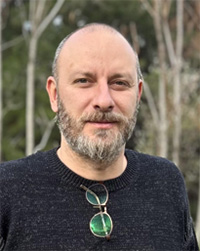 |
Dimitrios Papanastasiou, Director MS Instrumentation Research, Bruker Daltonics Dimitrios Papanastasiou is a recognized expert in mass spectrometry instrumentation and ion mobility technologies. Following his doctoral studies in TOF mass spectrometry instrumentation in Manchester, UK, he worked at Kratos Analytical and Shimadzu Research Laboratories, contributing to the development of advanced TOF-MS and ion mobility platforms, and conducted postdoctoral research in Differential Ion Mobility Spectrometry in New Mexico, USA. In 2009, he founded Fasmatech, which delivered more than 30 custom mass spectrometry systems to leading universities and research institutes worldwide. He is the inventor of the Omnitrap platform and, following Fasmatech’s acquisition by Bruker in 2023, played a key role in the development of the timsOmni platform, introduced at ASMS 2025. Since 2026, he has served as Director of MS Instrumentation Research at Bruker, driving innovation in next-generation MS solutions for proteomics and biological characterization. |
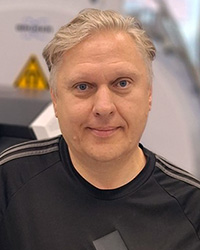 |
Petr Novák, Head of Laboratory of Structural Biology and Cell Signaling, BioCeV – Institute of Microbiology, Czech Academy of Sciences Petr Novák began working in protein mass spectrometry in 1995. Over the course of his career, his research evolved from proteomics toward structural mass spectrometry, particularly during his postdoctoral stay at Sandia National Laboratories, where he developed methodological approaches for chemical cross-linking of proteins. After returning to the Czech Republic, he led part of the mass spectrometry group at the Institute of Microbiology of the Czech Academy of Sciences. Since 2012, he has headed the Laboratory of Structural Biology and Cell Signaling, which has been based at the BIOCEV research centre since 2016. His research combines the development of analytical methods for structural biology, software tools for MS data interpretation and their application to biologically and pharmaceutically relevant systems. His recent work has focused on novel chemical labelling and cross-linking reagents, fast photochemical oxidation of proteins, top-down mass spectrometry, software for unconventional cross-linking experiments and the structural characterization of protein–DNA interactions. He also contributes to scientific societies and international standardization initiatives in protein footprinting and cross-linking mass spectrometry, supervises students and serves as a reviewer for international scientific journals. |
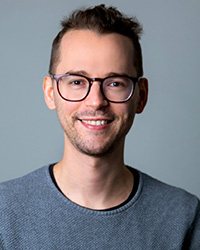 |
Oskar Knittelfelder, Field Application Scientist, Bruker Daltonics Oskar Knittelfelder is a biochemist and mass spectrometry (MS) specialist with extensive experience in small and large molecule MS, analytical method development, and laboratory leadership. Before starting at Bruker, he was leading the internal MS quality control lab for the medicinal chemistry department at Innovation Campus Berlin – Nuvisan. As a Field Application Scientist at Bruker Daltonics, he combines scientific expertise with hands-on customer support and training. |
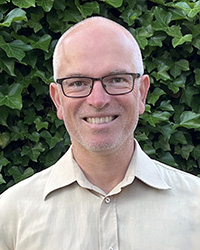 |
Brian Kåre Kristensen, Ph.D, Protein & Peptide Characterization Specialist CMC, Novo Nordisk Brian Kåre Kristensen, Ph.D., is a protein and peptide characterization specialist in the CMC area at Novo Nordisk A/S. He has more than 20 years of experience supporting the development of new drugs from first human dose to market, with a focus on structural elucidation of drug substances and impurities in API and drug product. His work includes applying advanced mass spectrometry workflows to support product understanding, method justification, and impurity risk assessment. He contributes to cross-functional development projects by translating analytical data into decision-relevant insights for robust control strategies. |
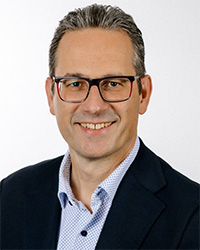 |
Marcus Mreyen, PhD, Sr. Director Business Development, Biofidus GmbH Marcus Mreyen is a biopharmaceutical analytics expert with more than 25 years of experience in protein and peptide characterization, mass spectrometry, and biologics development. He holds a PhD in Chemistry and conducted research in protein analytics and proteomics at Macquarie University and the Australian Proteome Analysis Facility (APAF) in Australia. He began his industry career at Protagen in 2000, managing a wide range of protein characterization projects for pharmaceutical and biotechnology customers. He later joined Shimadzu as Product Manager for Mass Spectrometry and Life Science Products, supporting customers across Europe and Russia in the implementation of advanced analytical workflows for biopharmaceutical research and development. After returning to ProtaGene, Marcus held senior business development roles, working closely with global biopharma companies on the characterization and development of biosimilars and innovative biologics. His experience spans the entire drug development lifecycle, from early research and process development to clinical development, commercialization, release testing, and stability studies. Since 2025, he has been leading business development activities at Biofidus, supporting biotechnology and pharmaceutical partners in addressing analytical challenges and advancing the development of next-generation biotherapeutics. |
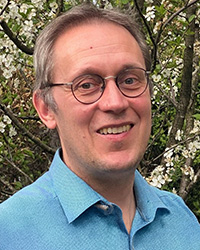 |
Dr. Christian Albers, Innovations Technical Specialist Manager, Bruker Daltonics Dr Albers brings nearly two decades of experience in mass spectrometry and biopharmaceutical analytics. Since joining Bruker in 2006, he has held a different roles, supporting mass spectrometry solutions from small-molecule analysis to advanced protein characterization. Over the years, he has developed particular expertise in the characterization of biologics and biopharmaceuticals. Prior to his current position, he served as Business Development Manager for the Pharmaceutical Market in the DACH region and Scandinavia, where he supported customers in implementing innovative analytical workflows for biologic drug development and characterization. In his current role, he works closely with research and industry partners to advance the adoption of cutting-edge mass spectrometry technologies for complex analytical challenges in life sciences and biopharmaceutical research. |
| Organized by | In collaboration with |
 |
 |